
Garage Door Making Noise in Texas City, TX - (346) 220-4724
Grinding, popping and rattling doors — diagnosis for a town built mostly before 1990
- Roller and bearing inspection, plastic or steel
- Track alignment and mounting-bracket check
- Hinge, bolt and bracket tightening
- Spring and cable wear inspection
- Opener chain or belt tension check
More about this in Texas City
A garage door making noise on the way up or down is telling you something specific is worn, loose or dry — grinding usually points to rollers or bearings, popping to hardware working itself loose, and a metal-on-metal squeal almost always means the track or the opener chain needs attention. The sound itself is the diagnostic clue, so what it sounds like matters before anything gets tightened, lubricated or replaced. There is a wider write-up on garage door company Texas City that covers the other faults too.
Call (346) 220-4724 and a crew working the Texas City area can track the sound to its source.
What a garage door making noise on the way up usually means
A door that grinds or squeals going up is almost always a roller problem — worn wheels, dry bearings, or rollers that have started riding rough inside a track that's no longer perfectly straight. A door that pops or bangs partway through its travel is more often loose hardware, since the bolts holding hinges and brackets to the door panels work themselves loose over years of vibration and eventually let a panel shift just enough to knock against the frame.
A garage door making noise that sounds like metal grinding on metal
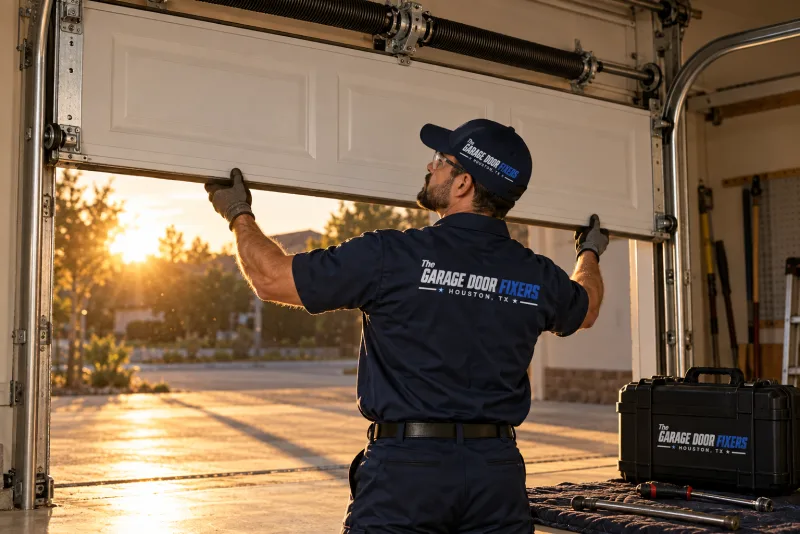
That sound points toward the track itself, or toward a roller that's lost its bearing grease and is now riding metal-on-metal against the track wall. Left alone, that kind of grinding wears a groove into the track and eventually pulls the roller off its path entirely, which turns a noise complaint into a door that jumps its track.
Why homes near the port get a garage door making noise sooner
Texas City's port and refining corridor sits close to residential streets in places, and homes nearest the plants can see airborne particulate and salt-air exposure that accelerates corrosion on unprotected metal garage hardware. Corroded hinges and rollers don't move smoothly — they bind, catch and grind instead of rolling clean, which is one of the more common sources of a garage door making noise call from streets closest to the industrial corridor. A different cause with similar signs is garage door lock replacement in Texas City, TX.
Older hardware behind a lot of Texas City's garage door noise

With a median house or condo built year of 1988, a large share of Texas City's garage door hardware — rollers, hinges, springs and cables — is original or close to it, well past the age where that kind of hardware typically starts announcing its wear through sound rather than failing outright. A door that's been quiet for years and suddenly starts grinding or popping is often original 1980s-era hardware finally giving out.
A garage door making noise near the bay in Texas City
Texas City sits on flat coastal plain with a large marshland area to the south, at an official elevation of only 10 feet above mean sea level, and the city's 17-mile levee and pump-station system built after Hurricane Carla has kept most of the housing stock from taking on direct storm-surge flooding. That protection means noisy hardware in Texas City is more often ordinary wear or salt-air corrosion than storm water damage — but on streets nearest the water, humidity alone can still work rust into rollers and hinges over time.
Don't keep running a noisy door hoping the sound works itself out — a grinding roller or a loosening bracket gets worse with every cycle, not better. For a garage door making noise anywhere in Texas City, call (346) 220-4724. Anyone whose door is doing something different should read about garage door not working repair in Texas City.
Texas City service area
Also serving
Mont Belvieu · Sheldon · New Caney · North Houston
More about the area
Background on the Texas City, Texas area and how it grew.